Ring-billed Gull
Larus delawarensis
RBGU
Bird Description
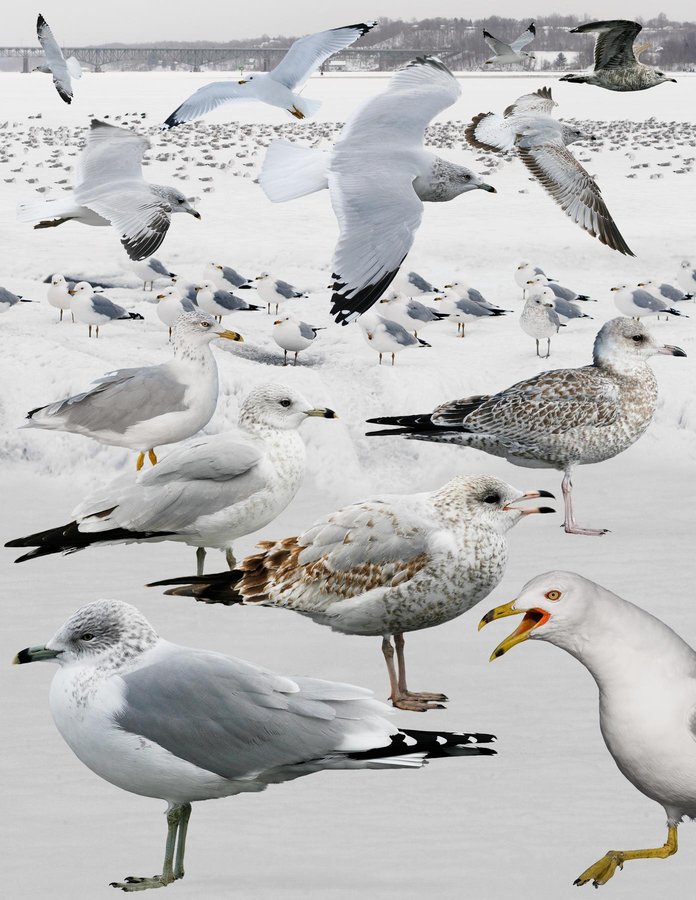
Very common. Breeds colonially in marshes. In many areas, particularly inland, the commonest gull and is good starting point for becoming comfortable with gull ID. The infamous parking lot ‘beggar,’ it will eat just about anything so can occur anywhere: farmland (follows the plough), lakes, beaches, dumps. ID: 3-yr gull. Medium-sized with small head, lacks the bulk and aggressive appearance of larger gulls. Slim and attenuated, tends to have well-defined markings and a ‘cleaner’ appearance than larger but similar HEGU. Bill always smaller than larger gulls with well-defined colors. In flight, is long and slim-winged with extensive and well-defined black wing-tips (older birds) with 2 small mirrors (ad). Ad br: pale gray upperparts. Yellow legs. Bright yellow bill with distinct black ring. Red orbital ring and gape. Pale iris. Nonbr: duller bare parts, well-defined blotches on crown and nape. 2nd-yr: as adult with more black in wing, typically 1 mirror, greenish legs. Compare 3rd-yr HEGU. Juv: short time period in this plumage. A few occur up to Christmas, these often confuse. Initially all-dark bill. Overall scaly brown impression. 1st-w: pale gray mantle. Pink legs. Pink bill with black tip. Mostly white underparts. Black tail band. Strong upperwing pattern. Compare 2-yr HEGU. 1st-s: grayer wings, changing bare parts suggest older birds. Late summer primary molt leaves many birds short-winged and lacking black!